Proclamation
Adjusting Imports of Copper Into the United States
Document ID
doc_27febcfcbfbecbea
Number
2025-14893
Citation
90 FR 37727
Context
- TypeProclamation
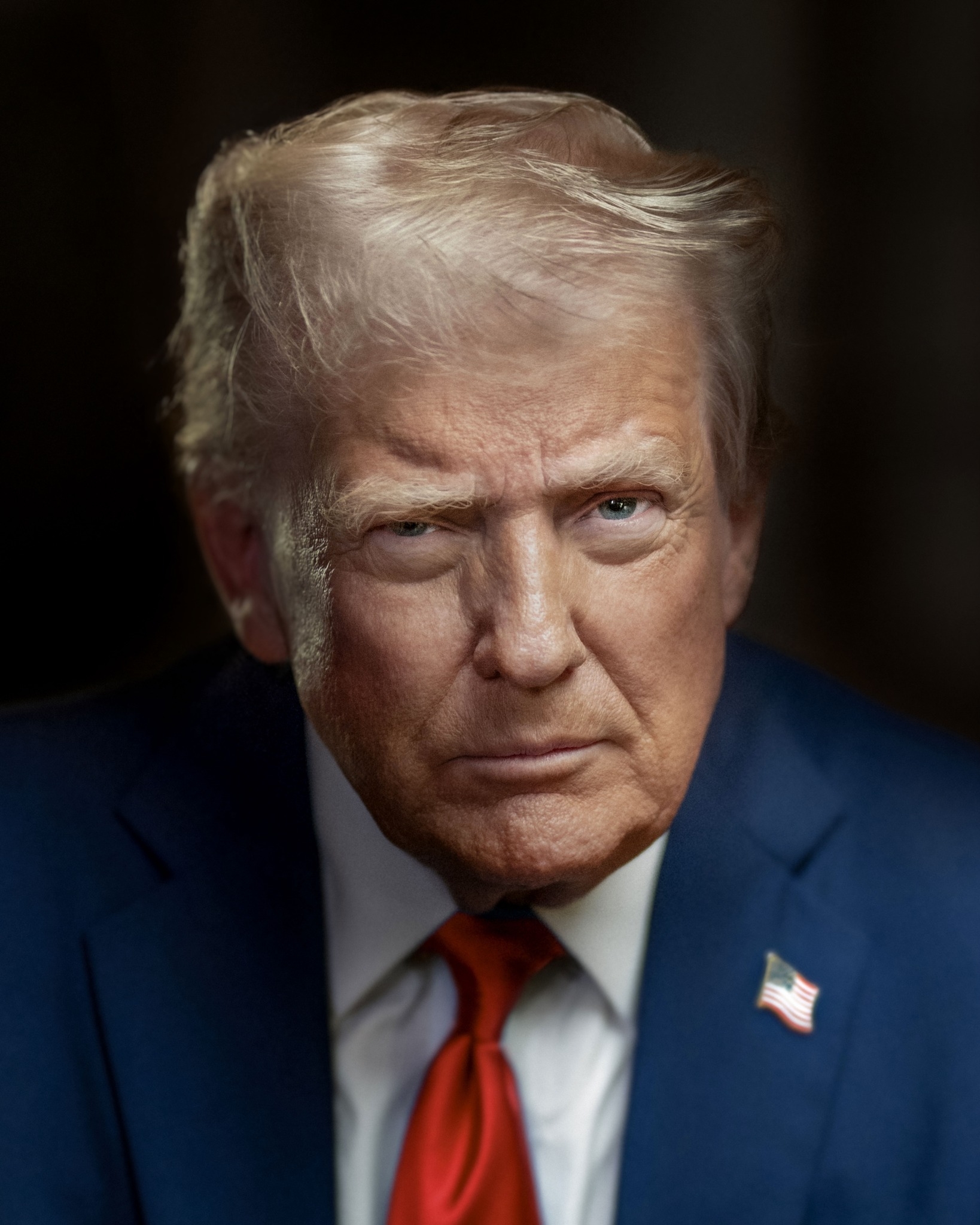
- President Donald J. Trump
- IssuedJuly 30, 2025
- PublishedAugust 5, 2025
Summary
Proclamation: Adjusting Imports of Copper Into the United States
Document Text
Proclamation 10962 of July 30, 2025

Adjusting Imports of Copper Into the United
States

By the President of the United States of America

A Proclamation

1. On June 30, 2025, the Secretary of Commerce
(Secretary) transmitted to me a report on his
investigation into the effects of imports of copper in
all forms (copper), including copper ores, copper
concentrates, refined copper, copper alloys, scrap
copper, and derivative products, on the national
security of the United States under section 232 of the
Trade Expansion Act of 1962, as amended, 19 U.S.C. 1862
(section 232). Based on the facts considered in that
investigation, the Secretary found and advised me of
his opinion that copper is being imported into the
United States in such quantities and under such
circumstances as to threaten to impair the national
security of the United States.

2. The Secretary found that the present quantities of
copper imports and the circumstances of global excess
capacity for producing copper are weakening our
economy, resulting in the persistent threat of further
closures of domestic copper production facilities and
the shrinking of our ability to meet national security
production requirements. Because of these risks, and
taking into account the close relation of the economic
welfare of the Nation to our national security and
other relevant factors, see 19 U.S.C. 1862(d), the
Secretary found that the present quantities and
circumstances of copper imports threaten to impair the
national security as provided in section 232.

3. In reaching this conclusion, the Secretary found
that copper is essential to the manufacturing
foundation on which United States national and economic
security depend. Copper is the second most widely used
material by the Department of Defense and is a
necessary input in a range of defense systems,
including aircraft, ground vehicles, ships, submarines,
missiles, and ammunition. Copper also plays a central
role in the broader United States industrial base. The
metal's exceptional electrical conductivity and
durability also make it indispensable to critical
infrastructure sectors that support the American
economy, national security, and public health.
Alternatives to copper are insufficient substitutes for
these vital industries and products in many
circumstances.

4. The Secretary found that the United States was a
world leader across the value chain of copper
production (mining, refining, semi-finished goods, and
finished goods containing copper) for most of the 20th
century. But despite copper being a crucial material in
manufacturing and for the national and economic
security of the United States, United States copper
production has plummeted. Today, a single foreign
country dominates global copper smelting and refining,
controlling over 50 percent of global smelting capacity
and holding four of the top five largest refining
facilities.

5. The Secretary found that unfair trade practices
abroad, exacerbated by overly burdensome environmental
regulations at home, have hollowed out United States
copper refining and smelting, caused the United States
to be overly reliant on foreign copper imports, and
prevent a path forward without strong corrective
action. Foreign competitors leverage state subsidies
and overproduction to flood international markets with
artificially low-priced copper products, driving United
States producers out of business. The United

States is now dangerously dependent on foreign imports
of semi-finished copper, intensive copper derivative
products, and copper-containing products, and
imbalances in the global markets make domestic
investment increasingly unviable.

6. The Secretary found that United States dependency on
foreign sources of copper is a national security
vulnerability that could be exploited by foreign
countries, weakens United States industrial resilience,
exposes the American people to supply chain
disruptions, economic instability, and strategic
vulnerabilities, and jeopardizes the United States
defense industrial base.

7. In light of these findings, the Secretary
recommended a range of actions to adjust the imports of
copper so that such imports will not threaten to impair
the national security. For example, the Secretary
recommended an immediate universal 30 percent import
duty on semi-finished copper products and intensive
copper derivative products. The Secretary also
recommended a phased universal tariff on refined copper
of 15 percent starting in 2027 and 30 percent starting
in 2028. The Secretary further recommended a domestic
sales requirement for copper input materials starting
at 25 percent in 2027, a domestic sales requirement of
25 percent for high-quality copper scrap, and export
controls for high-quality copper scrap.

8. After considering the Secretary's report, the
factors in section 232(d), 19 U.S.C. 1862(d), and other
relevant factors, among other things, I concur with the
Secretary's finding that copper is being imported into
the United States in quantities and under circumstances
that threaten to impair the national security of the
United States. In my judgment, and in light of the
Secretary's report, the factors in section 232(d), 19
U.S.C. 1862(d), and other relevant factors, among other
things, I also determine that it is necessary and
appropriate to impose tariffs, as described below, to
adjust imports of copper and its derivatives so that
such imports will not threaten to impair the national
security of the United States.

9. To ensure that the tariffs on copper in this
proclamation are not circumvented and that the purpose
of this action to address the threat to impair the
national security of the United States posed by imports
of copper is not undermined, I also deem it necessary
and appropriate to set up a process to identify and
impose tariffs on certain derivatives of copper, as
further described below.

10. In my judgment, the action in this proclamation
will, among other things, help increase domestic
production of semi-finished copper products and
intensive copper derivative products, thereby reducing
our Nation's reliance on foreign sources. It will
ensure that domestic fabricators are able to supply
sufficient quantities of copper products essential for
infrastructure, defense systems, and advanced
manufacturing. This action will also promote
investment, employment, and innovation in the domestic
copper fabrication sector, strengthen supply chains,
enhance industrial resilience, and generate meaningful
economic benefits. This action will adjust the imports
of semi-finished copper products, intensive copper
derivative products, and certain other copper
derivatives and is necessary and appropriate to address
the threat to impair the national security of the
United States posed by imports of such articles.

11. Section 232 authorizes the President to adjust the
imports of an article and its derivatives that are
being imported into the United States in such
quantities or under such circumstances as to threaten
to impair the national security so that such imports
will not threaten to impair the national security.

12. Section 604 of the Trade Act of 1974, as amended,
19 U.S.C. 2483, authorizes the President to embody in
the Harmonized Tariff Schedule of the United States
(HTSUS) the substance of statutes affecting import
treatment, and actions thereunder, including the
removal, modification, continuance, or imposition of
any rate of duty or other import restriction.

13. Consistent with the General Terms for the United
States of America and the United Kingdom of Great
Britain and Northern Ireland Economic Prosperity Deal
(May 8, 2025), the United States intends to coordinate
with the United Kingdom to adopt a structured,
negotiated approach to addressing the national security
threat in the copper sector.

NOW, THEREFORE, I, DONALD J. TRUMP, President of the
United States of America, by the authority vested in me
by the Constitution and the laws of the United States
of America, including section 232; the International
Emergency Economic Powers Act (50 U.S.C. 1701 et seq.);
section 101 of the Defense Production Act of 1950
(DPA), as amended, 50 U.S.C. 4511; section 301 of title
3, United States Code; and section 604 of the Trade Act
of 1974, as amended, 19 U.S.C. 2483, do hereby proclaim
as follows:

(1) Except as otherwise provided in this proclamation, all imports of semi-
finished copper products and intensive copper derivative products, as set
forth in the Annex to this proclamation, shall be subject to a 50 percent
tariff. This tariff shall be effective with respect to goods entered for
consumption, or withdrawn from warehouse for consumption, on or after 12:01
a.m. eastern daylight time on August 1, 2025, and shall continue in effect,
unless such action is expressly reduced, modified, or terminated. This
tariff is in addition to any other duties, fees, exactions, and charges
applicable to such imported semi-finished copper products and intensive
copper derivative products, unless stated otherwise below.

(2) The Secretary, in consultation with the United States International
Trade Commission and U.S. Customs and Border Protection (CBP), shall
determine whether any modifications to the HTSUS are necessary to
effectuate this proclamation and shall make such modifications through
notice in the Federal Register if needed.

(3) Within 90 days after the date of this proclamation, the Secretary shall
establish a process for including additional derivative copper articles
within the scope of the duties of this proclamation, consistent with the
processes established pursuant to Proclamation 10895 of February 10, 2025
(Adjusting Imports of Aluminum Into the United States) and Proclamation
10896 of February 10, 2025 (Adjusting Imports of Steel Into the United
States).

(4) The non-copper content of all copper articles subject to this
proclamation shall be subject to tariffs pursuant to Executive Order 14257
of April 2, 2025 (Regulating Imports With a Reciprocal Tariff To Rectify
Trade Practices That Contribute to Large and Persistent Annual United
States Goods Trade Deficits), and any other applicable duties, including
those imposed by Executive Order 14193 of February 1, 2025 (Imposing Duties
To Address the Flow of Illicit Drugs Across Our Northern Border), as
amended, Executive Order 14194 of February 1, 2025 (Imposing Duties To
Address the Situation at Our Southern Border), as amended, and Executive
Order 14195 of February 1, 2025 (Imposing Duties To Address the Synthetic
Opioid Supply Chain in the People's Republic of China), as amended. The
additional duties described in clauses 1 through 3 of this proclamation
shall apply only to the copper content of articles subject to this
proclamation. CBP shall issue authoritative guidance mandating strict
compliance with declaration requirements for copper content in imported
articles and outlining maximum penalties for noncompliance, including that
importers who submit underreported declarations may be subject to severe
consequences, such as significant monetary penalties, loss of import
privileges, and criminal liability, consistent with United States law.

(5) If any product is subject to tariffs under both this proclamation and
Proclamation 10908 of March 26, 2025 (Adjusting Imports of Automobiles and
Automobile Parts Into the United States), as amended, the product shall be
subject to the duties imposed pursuant to Proclamation 10908, as amended,
and not those imposed pursuant to this proclamation.

(6) Any product described in clause 1 of this proclamation, except those
eligible for admission as ``domestic status'' as described in 19 CFR
146.43, that is subject to a duty imposed by this proclamation and that is
admitted into a United States foreign trade zone on or after the effective
date of this proclamation must be admitted as ``privileged foreign'' status
as described in 19 CFR 146.41, and will be subject upon entry for
consumption to any ad valorem rates of duty related to the classification
under the applicable HTSUS subheading.

(7) The Secretary shall continue to monitor imports of copper and its
derivatives. The Secretary shall, from time to time, in consultation with
any senior executive branch officials the Secretary deems appropriate,
review the status of copper and copper derivative imports with respect to
national security. The Secretary shall inform the President of any
circumstances that, in the Secretary's opinion, might indicate the need for
further action by the President under section 232. By June 30, 2026, the
Secretary shall provide the President with an update on domestic copper
markets, including refining capacity and the market for refined copper in
the United States, so that the President may determine whether imposing a
phased universal import duty on refined copper of 15 percent starting on
January 1, 2027, and 30 percent starting on January 1, 2028, as recommended
by the June 30, 2025, report, is warranted to ensure that copper imports do
not continue to threaten to impair the national security. The Secretary
shall also inform the President of any circumstance that, in the
Secretary's opinion, might indicate that the duty rate provided for in this
proclamation, or any actions modifying this proclamation, is no longer
necessary.

(8) Separately, I find that copper input materials and high-quality copper
scrap meet the criteria specified in section 101(b) of the DPA, 50 U.S.C.
4511(b). Pursuant to the authority delegated to the Secretary in Executive
Order 13603 of March 16, 2012 (National Defense Resources Preparedness),
the Secretary shall take all appropriate action to implement the domestic
sales requirements that he recommended in the June 30, 2025, report.

(9) The Secretary may issue regulations, rules, guidance, and procedures
consistent with the purpose of this proclamation, including to address
operational necessity.

(10) No drawback shall be available with respect to the duties imposed
pursuant to this proclamation.

(11) CBP may take any necessary or appropriate measure to administer the
tariff imposed by this proclamation.

(12) Any provision of previous proclamations and Executive Orders that is
inconsistent with the actions taken in this proclamation is superseded to
the extent of such inconsistency. If any provision of this proclamation, or
the application of any provision to any individual or circumstance, is held
to be invalid, the remainder of this proclamation and the application of
its provisions to any other individuals or circumstances shall not be
affected.

IN WITNESS WHEREOF, I have hereunto set my hand this
thirtieth day of July, in the year of our Lord two
thousand twenty-five, and of the Independence of the
United States of America the two hundred and fiftieth.

[GRAPHIC] [TIFF OMITTED] TD05AU25.019

[GRAPHIC] [TIFF OMITTED] TD05AU25.020

[GRAPHIC] [TIFF OMITTED] TD05AU25.021

[GRAPHIC] [TIFF OMITTED] TD05AU25.022

[GRAPHIC] [TIFF OMITTED] TD05AU25.023

[GRAPHIC] [TIFF OMITTED] TD05AU25.024