Proclamation
Establishment of the Pacific Remote Islands Marine National Monument
Document ID
doc_12aa222bc7f674b3
Number
E9-500
Citation
74 FR 1565
Context
- TypeProclamation
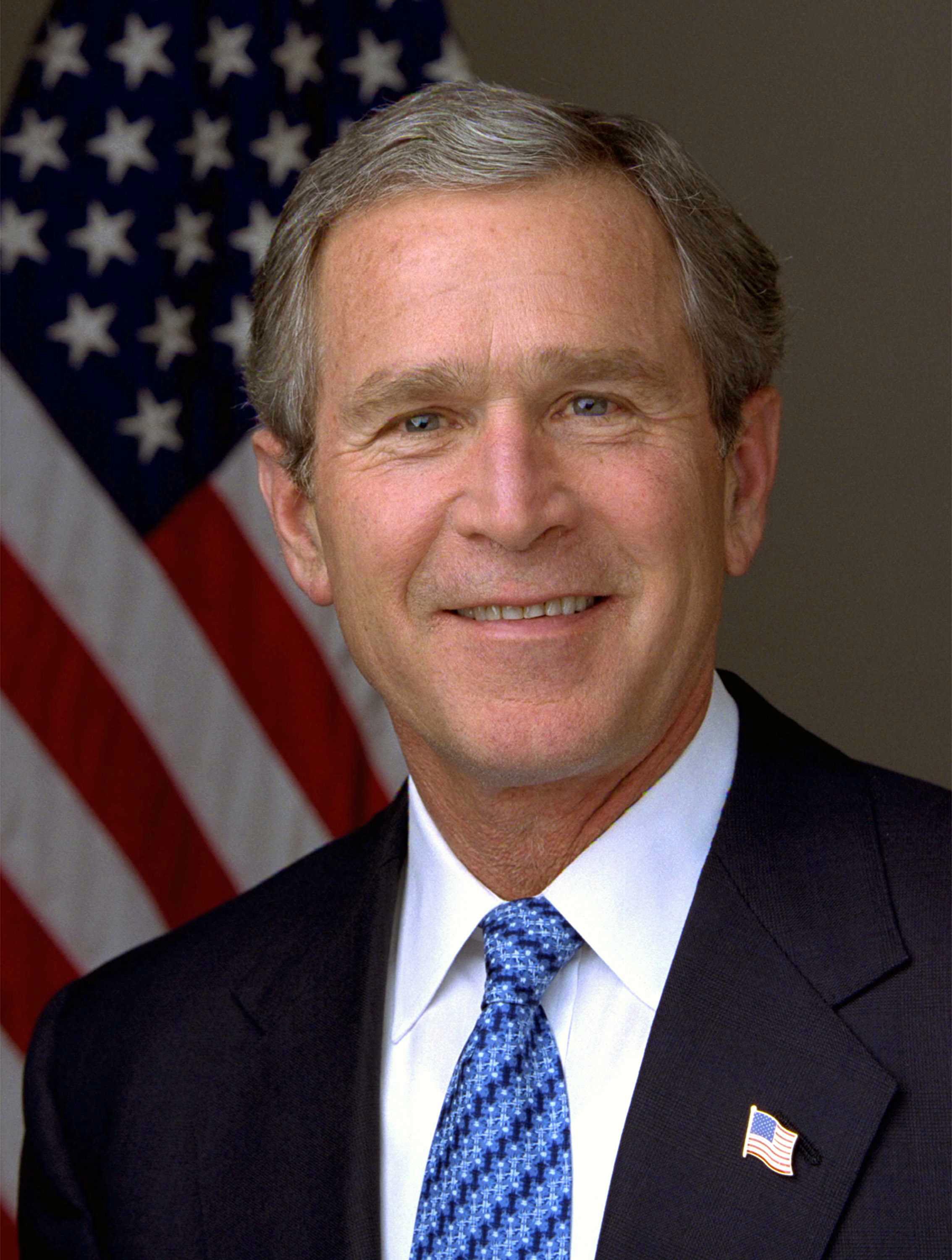
- President George W. Bush
- IssuedJanuary 6, 2009
- PublishedJanuary 12, 2009
Summary
Proclamation: Establishment of the Pacific Remote Islands Marine National Monument
Document Text
Proclamation 8336 of January 6, 2009

Establishment of the Pacific Remote Islands
Marine National Monument

By the President of the United States of America

A Proclamation

The Pacific Remote Islands area consists of Wake,
Baker, Howland, and Jarvis Islands, Johnston Atoll,
Kingman Reef, and Palmyra Atoll, which lie to the south
and west of Hawaii. With the exception of Wake Island,
these islands are administered as National Wildlife
Refuges by the United States Fish and Wildlife Service
of the Department of the Interior. These refuges are an
important part of the most widespread collection of
marine- and terrestrial-life protected areas on the
planet under a single country's jurisdiction. They
sustain many endemic species including corals, fish,
shellfish, marine mammals, seabirds, water birds, land
birds, insects, and vegetation not found elsewhere.

Wake Island, to the west of Honolulu, Hawaii, is the
northernmost atoll in the Marshall Islands geological
ridge and perhaps the oldest living atoll in the world.
Though it was substantially modified by the United
States to create a military base before and after World
War II, its major habitats are the three low coral
islands consisting of shells, coral skeletons, and
sand, supporting atoll vegetation adapted to arid
climate. Wake Island supports 12 species of resident
nesting seabirds and 6 species of migratory shorebirds,
including 2 species of tropicbirds, 3 species of
boobies, Great Frigatebird, Sooty Tern, Brown Noddy,
and Wedge-tailed Shearwater. Black-footed Albatross and
Laysan Albatross recently recolonized Wake Island,
making it one of the few northern albatross colonies
outside the Hawaiian archipelago.

Shallow coral reefs thrive around the perimeter of Wake
Island. Fish populations are abundant and support at
least 323 species, including large populations of the
Napoleon wrasse (Chelinus), sharks of several species,
and large schools of the Bumphead parrotfish
(Bolbometapon), all of which are globally depleted.
Beyond the shallow reefs, the outer reef slope descends
sharply to great depths.

Baker, Howland, and Jarvis Islands were first formed as
fringing reefs around islands formed by Cretaceous-era
volcanoes (approximately 120-75 million years ago). As
the volcanoes subsided, the coral reefs grew upward,
maintaining proximity to the sea surface. These low
coral islands consist of coral rock, shells, and sand
that support trees, shrubs, and grasses adapted to the
arid climate at the equator. All three are surrounded
by shallow coral reefs to depths of 100 meters, below
which the reef slope descends steeply to great depths.
Deep coral forests occur below photic zones of all
three islands at depths below 200 meters, especially at
Jarvis where surveys have revealed living colonies of
precious and ancient gold coral up to 5,000 years old.

The waters surrounding Baker, Howland, and Jarvis
Islands have fish biomass double that of the
Papahanaumokuakea Marine National Monument, and 16
times that of the main Hawaiian Islands, due to the
Equatorial Undercurrent that moves from west to east
along the equator, creating localized nutrient-rich
upwellings in shallows next to the islands. These are
three

of only six islands in the entire Pacific Ocean where
this phenomenon is possible. These islands are high in
coral cover and biodiversity and are predator-dominated
systems. Their biomass of top predators exceeds that of
the Great Barrier Reef or Kenyan Marine Protected
Areas. The islands now host about a dozen nesting bird
species including several nesting and migratory bird
species that are of conservation significance. Jarvis
alone has nearly 3 million pairs of Sooty Terns. There
are about 300 fish species found off the islands. Giant
clams (Tridacna), Napoleon wrasses, and Bumphead
parrotfish are common, and sharks of many species are
especially abundant at Jarvis and commonly larger there
than elsewhere. Endangered hawksbill turtle and
threatened green turtles forage in nearshore waters.
All three islands afford unique opportunities to
conduct climate change research at the equator, far
from population centers. The coral skeletons there have
recorded the earth's climatic history for many millions
of years.

Johnston Atoll, the northernmost island in the island
chain, is an ancient atoll and probably one of the
oldest in the Pacific Ocean. Unlike most atolls, it
does not have a surrounding barrier reef but has a
semicircular emergent reef around the north and western
margins of the island. Four major habitats characterize
Johnston: low-lying islets consisting of the remains of
corals and shells, shallow coral reefs to depths of 150
meters, deeper reefs to depths of 1,000 meters or more,
and the slope of the ancient volcano on which the
island rests.

Johnston is a genetic and larval stepping stone from
the Remote Islands to the Hawaiian Islands for
invertebrates, other reef fauna, corals, and dolphins.
Despite its isolation, Johnston supports thriving
communities of Table corals (Acropora) and a total of
45 coral species, including a dozen species confined to
the Hawaiian and northern Line Islands. Some 300
species of reef fish are at Johnston, including the
endemic Nahacky's pygmy angelfish. Many threatened,
endangered, and depleted species thrive there,
including the green turtle, hawksbill turtle, pearl
oyster, giant clams, reef sharks, groupers, humphead
wrasse, bumphead parrotfish, whales, and dolphins.
Endangered Hawaiian Monk Seals occasionally visit the
atoll. Deep diving submersible surveys have revealed
that Johnston supports the deepest reef building corals
(Leptoseris) on record and large populations of
hydrozoan corals (Millepora, Distichopora, Staylaster).
Land areas support large populations of migratory
shorebirds and resident seabird species, including
populations of regional, national, or international
significance: Wedge-tailed Shearwaters, Christmas
Shearwaters, Red-tailed Tropicbirds, Brown Boobies,
Great Frigatebirds, Gray-backed Terns, and White Terns.
Approximately 200 threatened Green turtles forage at
Johnston. The surrounding waters are used by six
depleted or endangered listed cetacean species: Sperm,
Blue, Sei, Humpback, and North Pacific Right whales.
Spinner dolphins are abundant, and endangered Humpback
whales may calve there.

Palmyra Atoll is a classic Darwinian atoll that formed
atop a sinking Cretaceous-era volcano. Kingman Reef
formed in the same manner but is considered an atoll
reef because it lacks permanent fast land areas or
islands. Kingman Reef contains a sheltered lagoon that
served as a way station for flying boats on Hawaii-to-
American Samoa flights during the late 1930s. There are
no terrestrial plants on the reef, which is frequently
awash, but it does support abundant and diverse marine
fauna and flora. Palmyra Atoll is managed by the United
States Fish and Wildlife Service as a wildlife refuge.
In 2001, the Secretary of the Interior established
National Wildlife Refuges at Palmyra Atoll and Kingman
Reef.

Palmyra Atoll and Kingman Reef are known to be among
the most pristine coral reefs in the world, with a
fully structured inverted food web. Kingman Reef is the
most pristine of any reef under U.S. jurisdiction. They
are ideal laboratories for assessing effects of climate
change without the difficulty of filtering
anthropogenic impacts. Both Palmyra Atoll and Kingman
Reef support higher levels of coral and other cnidarian
species diversity (180-190 species) than any other
atoll or reef island in the central Pacific, twice

as many as are found in Hawaii or Florida. Palmyra
atoll has one of the best remaining examples of Pisonia
grandis forest found in the Pacific region. This forest
type has been lost or severely degraded over much of
its range due to increased human population and
development. Fish species diversity at Palmyra (418
species) is higher than, while that of Kingman (297
species) is comparable to, that of the other remote
Pacific refuges. Many threatened, endangered, and
depleted species thrive there, including the green and
hawksbill turtle, pearl oyster, giant clams (the
highest concentration in the Pacific Remote Island
Area), reef sharks, Coconut crabs, groupers, humphead
and Napoleon wrasse, bumphead parrotfish, and dolphins.
Significant numbers of threatened green turtles forage
at both atolls, especially at Palmyra; endangered
Hawksbill sea turtles forage at both atolls. Large
schools of rare Melon-headed whales reside off both
atolls. A possibly new species of beaked whale was
recently described from 2 specimens stranded at Palmyra
and 1 at Christmas Island. Palmyra supports 11 nesting
seabird species including the third-largest Red-footed
Booby colony in the world. Large numbers of Bristle-
thighed Curlews, a migratory shorebird of conservation
significance, winter at Palmyra.

WHEREAS Wake, Baker, Howland, and Jarvis Islands,
Johnston Atoll, Kingman Reef, and Palmyra Atoll and
their surrounding waters contain objects of historic or
scientific interest that are situated upon lands owned
or controlled by the Government of the United States;

WHEREAS the Department of Defense has historically
maintained facilities, defensive areas, and airspace
reservations at Wake Island and Johnston Atoll;

WHEREAS the United States continues to act in
accordance with the balance of interests relating to
traditional uses of the oceans recognizing freedom of
navigation and overflight and other internationally
recognized lawful uses of the sea;

WHEREAS section 2 of the Act of June 8, 1906 (34 Stat.
225, 16 U.S.C. 431) (the ``Antiquities Act'')
authorizes the President, in his discretion, to declare
by public proclamation historic landmarks, historic and
prehistoric structures, and other objects of historic
or scientific interest that are situated upon lands
owned or controlled by the Government of the United
States to be national monuments, and to reserve as a
part thereof parcels of land, the limits of which in
all cases shall be confined to the smallest area
compatible with the proper care and management of the
objects to be protected;

WHEREAS it is in the public interest to preserve the
marine environment around the islands of Wake, Baker,
Howland, and Jarvis Islands, Johnston Atoll, Kingman
Reef, and Palmyra Atoll for the care and management of
the historic and scientific objects therein:

NOW, THEREFORE, I, GEORGE W. BUSH, President of the
United States of America, by the authority vested in me
by section 2 of the Antiquities Act, do proclaim that
there are hereby set apart and reserved as the Pacific
Remote Islands Marine National Monument (the
``monument'' or ``marine national monument'') for the
purpose of protecting the objects identified above, all
lands and interests in lands owned or controlled by the
Government of the United States within the boundaries
described below and depicted on the accompanying maps
entitled ``Pacific Remote Islands Marine National
Monument'' attached to and forming a part of this
proclamation. The monument includes the waters and
submerged and emergent lands of the Pacific Remote
Islands to the lines of latitude and longitude depicted
on the accompanying maps, which lie approximately 50
nautical miles from the mean low water lines of Wake,
Baker, Howland, and Jarvis Islands, Johnston Atoll,
Kingman Reef, and Palmyra Atoll. The Federal land and
interests in land reserved consists of approximately
86,888 square miles, which is the smallest area
compatible with the proper care and management of the
objects to be protected.

All Federal lands and interests in lands within the
boundaries of this monument are hereby withdrawn from
all forms of entry, location, selection, sale, leasing,
or other disposition under the public land laws to the
extent that those laws apply. Lands and interests in
lands within the monument not owned or controlled by
the United States shall be reserved as a part of the
monument upon acquisition of title or control by the
United States.

Management of the Marine National Monument

The Secretary of the Interior, in consultation with the
Secretary of Commerce, shall have responsibility for
management of the monument, including out to 12
nautical miles from the mean low water lines of Wake,
Baker, Howland, and Jarvis Islands, Johnston Atoll,
Kingman Reef, and Palmyra Atoll, pursuant to applicable
legal authorities. However, the Secretary of Defense
shall continue to manage Wake Island, according to the
terms and conditions of an Agreement between the
Secretary of the Interior and Secretary of the Air
Force, unless and until such Agreement is terminated.
The Secretary of Commerce, through the National Oceanic
and Atmospheric Administration, and in consultation
with the Secretary of the Interior, shall have primary
responsibility for management of the monument seaward
of the area 12 nautical miles of the mean low water
lines of Wake, Baker, Howland, and Jarvis Islands,
Johnston Atoll, Kingman Reef, and Palmyra Atoll, with
respect to fishery-related activities regulated
pursuant to the Magnuson-Stevens Fishery Conservation
and Management Act (16 U.S.C. 1801 et seq.) and any
other applicable legal authorities. The Secretaries of
Commerce and the Interior shall not allow or permit any
appropriation, injury, destruction, or removal of any
feature of this monument except as provided for by this
proclamation and shall prohibit commercial fishing
within boundaries of the monument.

The Secretaries of the Interior and of Commerce shall
take appropriate action pursuant to their respective
authorities under the Antiquities Act and the Magnuson-
Stevens Fishery Conservation and Management Act, and
such other authorities as may be available to implement
this proclamation, to regulate fisheries, and to ensure
proper care and management of the monument.

Regulation of Scientific Exploration and Research

Subject to such terms and conditions as the respective
Secretary deems necessary for the care and management
of the objects of this monument, the Secretary of the
Interior may permit scientific exploration and research
within the monument, including incidental
appropriation, injury, destruction, or removal of
features of this monument for scientific study, and the
Secretary of Commerce may permit fishing within the
monument for scientific exploration and research
purposes to the extent authorized by the Magnuson-
Stevens Fishery Conservation and Management Act. The
prohibitions required by this proclamation shall not
restrict scientific exploration or research activities
by or for the Secretaries, and nothing in this
proclamation shall be construed to require a permit or
other authorization from the other Secretary for their
respective scientific activities.

Regulation of Fishing and Management of Fishery
Resources

The respective Secretaries may permit noncommercial
fishing upon request, at specific locations in
accordance with this proclamation. Noncommercial
fishing opportunities currently allowed by the U.S.
Fish and Wildlife Service at Palmyra Atoll may continue
unless the Secretary of the Interior determines such
fishing would not be compatible with the purposes of
the Palmyra Atoll National Wildlife Refuge. The
Secretary shall provide a process to ensure that
recreational fishing shall be managed as a sustainable
activity in certain areas of the monument, consistent
with Executive Order 12962 of June 7, 1995, as amended,
and other applicable law.

Monument Management Planning

The Secretaries of the Interior and Commerce shall,
within 2 years of the date of this proclamation,
prepare management plans within their respective

authorities and promulgate implementing regulations
that address any further specific actions necessary for
the proper care and management of the objects
identified in this proclamation at Baker, Howland, and
Jarvis Islands, Kingman Reef, and Palmyra Atoll. The
Secretaries shall revise and update the management
plans as necessary. The Secretary of the Interior shall
revise the management plan to incorporate measures for
the management of Johnston Atoll within 2 years of the
date that the Department of Defense terminates its use
of Johnston Atoll. If the Secretary of the Air Force
terminates the Agreement regarding its use of Wake
Island, the Secretary of the Interior shall revise the
management plan to incorporate Wake Island management
within 2 years of the date that the Air Force
terminates its use of Wake Island. In developing and
implementing any management plans and any management
rules and regulations, the Secretaries shall consult
and designate and involve as cooperating agencies the
agencies with jurisdiction or special expertise,
including the Department of Defense, in accordance with
the National Environmental Policy Act (42 U.S.C. 4321
et seq.,) its implementing regulations, and with
Executive Order 13352, of August 26, 2004, Facilitation
of Cooperative Conservation.

The management plans and their implementing regulations
shall impose no restrictions on innocent passage in the
territorial sea or otherwise restrict navigation and
overflight and other internationally recognized lawful
uses of the sea in the monument and shall incorporate
the provisions of this proclamation regarding Armed
Forces actions and compliance with international law.

This proclamation shall be applied in accordance with
international law. No restrictions shall apply to or be
enforced against a person who is not a citizen,
national, or resident alien of the United States
(including foreign flag vessels) unless in accordance
with international law.

Emergencies, National Security, and Law Enforcement
Activities

1. The prohibitions required by this proclamation shall
not apply to activities necessary to respond to
emergencies threatening life, property, or the
environment, or to activities necessary for national
security or law enforcement purposes.

2. Nothing in this proclamation shall limit agency
actions to respond to emergencies posing an
unacceptable threat to human health or safety or to the
marine environment and admitting of no other feasible
solution.

Armed Forces Actions

1. The prohibitions required by this proclamation shall
not apply to activities and exercises of the Armed
Forces (including those carried out by the United
States Coast Guard).

2. The Armed Forces shall ensure, by the adoption of
appropriate measures not impairing operations or
operational capabilities, that its vessels and aircraft
act in a manner consistent, so far as is reasonable and
practicable, with this proclamation.

3. In the event of threatened or actual destruction of,
loss of, or injury to a monument resource or quality
resulting from an incident, including but not limited
to spills and groundings, caused by a component of the
Department of Defense or the United States Coast Guard,
the cognizant component shall promptly coordinate with
the Secretary of the Interior or Commerce, as
appropriate, for the purpose of taking appropriate
actions to respond to and mitigate any actual harm and,
if possible, restore or replace the monument resource
or quality.

4. Nothing in this proclamation or any regulation
implementing it shall limit or otherwise affect the
Armed Forces' discretion to use, maintain, improve,
manage, or control any property under the
administrative control of a Military Department or
otherwise limit the availability of such property for
military mission purposes, including, but not limited
to, defensive areas and airspace reservations.

The establishment of this monument is subject to valid
existing rights.

This proclamation is not intended to, and does not,
create any right or benefit, substantive or procedural,
enforceable at law or in equity, by any party against
the United States, its agencies, instrumentalities, or
entities, its officers, employees, agents, or any other
person.

Nothing in this proclamation shall be deemed to revoke
any existing withdrawal, reservation, or appropriation;
however, the national monument shall be dominant over
any other existing federal withdrawal, reservation, or
appropriation.

Warning is hereby given to all unauthorized persons not
to appropriate, excavate, injure, destroy, or remove
any feature of this monument and not to locate or
settle upon any lands thereof.

IN WITNESS WHEREOF, I have hereunto set my hand this
sixth day of January, in the year of our Lord two
thousand nine, and of the Independence of the United
States of America the two hundred and thirty-third.

[GRAPHIC] [TIFF OMITTED] TD12JA09.001

[GRAPHIC] [TIFF OMITTED] TD12JA09.002

[GRAPHIC] [TIFF OMITTED] TD12JA09.003

[GRAPHIC] [TIFF OMITTED] TD12JA09.004

[GRAPHIC] [TIFF OMITTED] TD12JA09.005