Executive Order
Addressing United States Investments in Certain National Security Technologies and Products in Countries of Concern
Document ID
doc_0ccdaf427e7662d9
Number
2023-17449
Citation
88 FR 54867
Context
- TypeExecutive Order
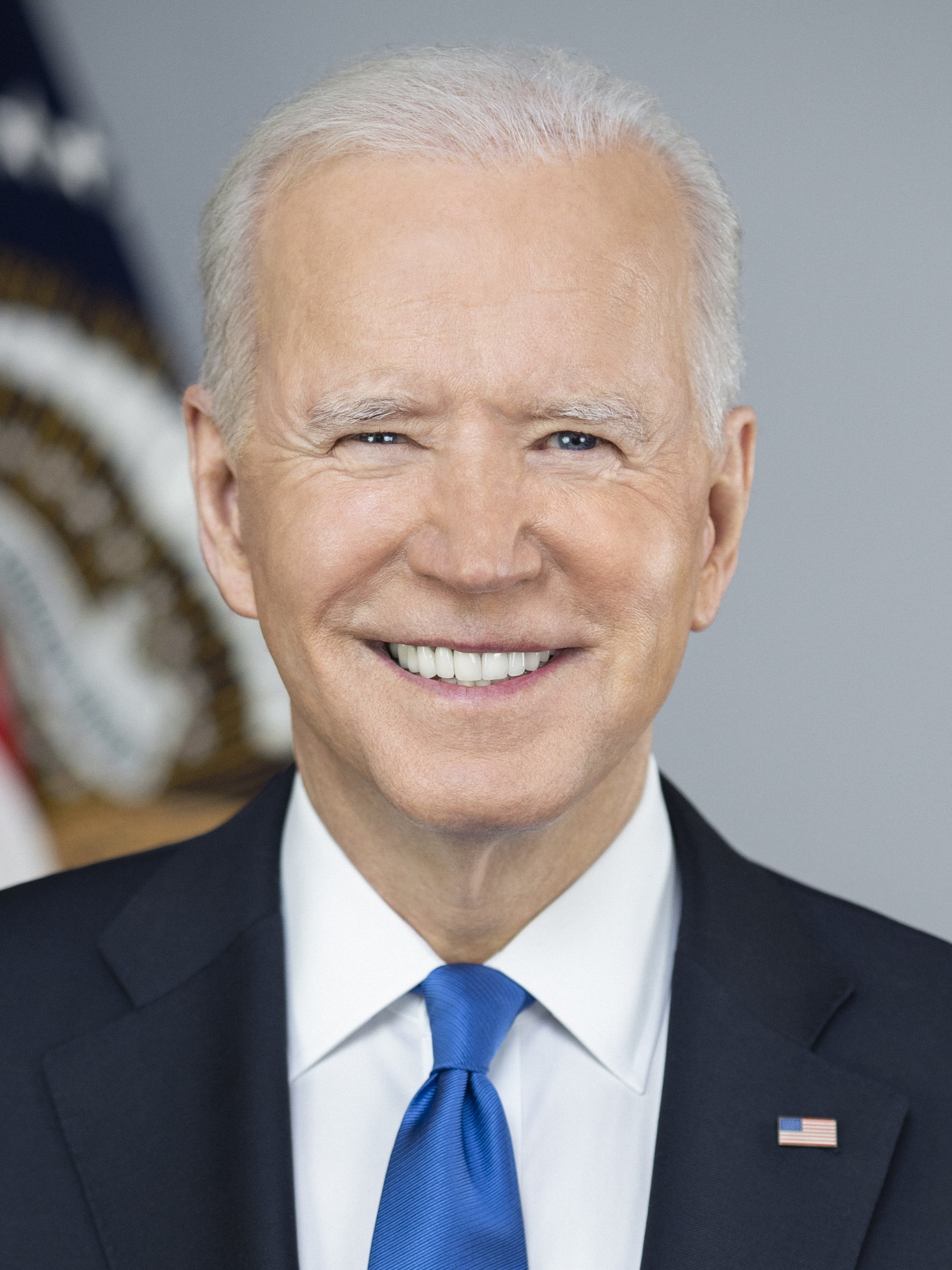
- President Joseph R. Biden Jr.
- IssuedAugust 9, 2023
- PublishedAugust 11, 2023
Summary
Executive Order: Addressing United States Investments in Certain National Security Technologies and Products in Countries of Concern
Document Text
Executive Order 14105 of August 9, 2023

Addressing United States Investments in Certain
National Security Technologies and Products in
Countries of Concern

By the authority vested in me as President by the
Constitution and the laws of the United States of
America, including the International Emergency Economic
Powers Act (50 U.S.C. 1701 et seq.) (IEEPA), the
National Emergencies Act (50 U.S.C. 1601 et seq.)
(NEA), and section 301 of title 3, United States Code,

I, JOSEPH R. BIDEN JR., President of the United States
of America, find that countries of concern are engaged
in comprehensive, long-term strategies that direct,
facilitate, or otherwise support advancements in
sensitive technologies and products that are critical
to such countries' military, intelligence,
surveillance, or cyber-enabled capabilities. Moreover,
these countries eliminate barriers between civilian and
commercial sectors and military and defense industrial
sectors, not just through research and development, but
also by acquiring and diverting the world's cutting-
edge technologies, for the purposes of achieving
military dominance. Rapid advancement in semiconductors
and microelectronics, quantum information technologies,
and artificial intelligence capabilities by these
countries significantly enhances their ability to
conduct activities that threaten the national security
of the United States. Advancements in sensitive
technologies and products in these sectors will
accelerate the development of advanced computational
capabilities that will enable new applications that
pose significant national security risks, such as the
development of more sophisticated weapons systems,
breaking of cryptographic codes, and other applications
that could provide these countries with military
advantages.

As part of this strategy of advancing the development
of these sensitive technologies and products, countries
of concern are exploiting or have the ability to
exploit certain United States outbound investments,
including certain intangible benefits that often
accompany United States investments and that help
companies succeed, such as enhanced standing and
prominence, managerial assistance, investment and
talent networks, market access, and enhanced access to
additional financing. The commitment of the United
States to open investment is a cornerstone of our
economic policy and provides the United States with
substantial benefits. Open global capital flows create
valuable economic opportunities and promote
competitiveness, innovation, and productivity, and the
United States supports cross-border investment, where
not inconsistent with the protection of United States
national security interests. However, certain United
States investments may accelerate and increase the
success of the development of sensitive technologies
and products in countries that develop them to counter
United States and allied capabilities.

I therefore find that advancement by countries of
concern in sensitive technologies and products critical
for the military, intelligence, surveillance, or cyber-
enabled capabilities of such countries constitutes an
unusual and extraordinary threat to the national
security of the United States, which has its source in
whole or substantial part outside the United States,
and that certain United States investments risk
exacerbating this threat. I hereby declare a national
emergency to deal with this threat.

Accordingly, I hereby order:

Section 1. Notifiable and Prohibited Transactions. (a)
To assist in addressing the national emergency declared
in this order, the Secretary of the Treasury
(Secretary), in consultation with the Secretary of
Commerce and, as appropriate, the heads of other
relevant executive departments and agencies (agencies),
shall issue, subject to public notice and comment,
regulations that require United States persons to
provide notification of information relative to certain
transactions involving covered foreign persons
(notifiable transactions) and that prohibit United
States persons from engaging in certain other
transactions involving covered foreign persons
(prohibited transactions).

(b) The regulations issued under this section shall
identify categories of notifiable transactions that
involve covered national security technologies and
products that the Secretary, in consultation with the
Secretary of Commerce and, as appropriate, the heads of
other relevant agencies, determines may contribute to
the threat to the national security of the United
States identified in this order. The regulations shall
require United States persons to notify the Department
of the Treasury of each such transaction and include
relevant information on the transaction in each such
notification.
(c) The regulations issued under this section shall
identify categories of prohibited transactions that
involve covered national security technologies and
products that the Secretary, in consultation with the
Secretary of Commerce and, as appropriate, the heads of
other relevant agencies, determines pose a particularly
acute national security threat because of their
potential to significantly advance the military,
intelligence, surveillance, or cyber-enabled
capabilities of countries of concern. The regulations
shall prohibit United States persons from engaging,
directly or indirectly, in such transactions.

Sec. 2. Duties of the Secretary. In carrying out this
order, the Secretary shall, as appropriate:

(a) communicate with the Congress and the public
with respect to the implementation of this order;
(b) consult with the Secretary of Commerce on
industry engagement and analysis of notified
transactions;
(c) consult with the Secretary of State, the
Secretary of Defense, the Secretary of Commerce, the
Secretary of Energy, and the Director of National
Intelligence on the implications for military,
intelligence, surveillance, or cyber-enabled
capabilities of covered national security technologies
and products and potential covered national security
technologies and products;
(d) engage, together with the Secretary of State
and the Secretary of Commerce, with allies and partners
regarding the national security risks posed by
countries of concern advancing covered national
security technologies and products;
(e) consult with the Secretary of State on foreign
policy considerations related to the implementation of
this order, including but not limited to the issuance
and amendment of regulations; and
(f) investigate, in consultation with the heads of
relevant agencies, as appropriate, violations of this
order or the regulations issued under this order and
pursue available civil penalties for such violations.

Sec. 3. Program Development. Within 1 year of the
effective date of the regulations issued under section
1 of this order, the Secretary, in consultation with
the Secretary of Commerce and, as appropriate, the
heads of other relevant agencies, shall assess whether
to amend the regulations, including whether to adjust
the definition of ``covered national security
technologies and products'' to add or remove
technologies and products in the semiconductors and
microelectronics, quantum information technologies, and
artificial intelligence sectors. The Secretary, in
consultation with the Secretary of Commerce and, as
appropriate, the heads of other relevant agencies,
shall periodically review the effectiveness of the
regulations thereafter.

Sec. 4. Reports to the President. Within 1 year of the
effective date of the regulations issued under section
1 of this order and, as appropriate

but no less than annually thereafter, the Secretary, in
coordination with the Secretary of Commerce and in
consultation with the heads of other relevant agencies
and the Director of the Office of Management and
Budget, as appropriate, shall provide the President,
through the Assistant to the President for National
Security Affairs:

(a) to the extent practicable, an assessment of the
effectiveness of the measures imposed under this order
in addressing threats to the national security of the
United States described in this order; advancements by
the countries of concern in covered national security
technologies and products critical for such countries'
military, intelligence, surveillance, or cyber-enabled
capabilities; aggregate sector trends evident in
notifiable transactions and related capital flows in
covered national security technologies and products,
drawing on analysis provided by the Secretary of
Commerce, the Director of National Intelligence, and
the heads of other relevant agencies, as appropriate;
and other relevant information obtained through the
implementation of this order; and
(b) recommendations, as appropriate, regarding:

(i) modifications to this order, including the addition or removal of
identified sectors or countries of concern, and any other modifications to
avoid circumvention of this order and enhance its effectiveness; and

(ii) the establishment or expansion of other Federal programs relevant to
the covered national security technologies and products, including with
respect to whether any existing legal authorities should be used or new
action should be taken to address the threat to the national security of
the United States identified in this order.

Sec. 5. Reports to the Congress. The Secretary is
authorized to submit recurring and final reports to the
Congress on the national emergency declared in this
order, consistent with section 40l(c) of the NEA (50
U.S.C. 1641(c)) and section 204(c) of IEEPA (50 U.S.C.
1703(c)).

Sec. 6. Official United States Government Business.
Nothing in this order or the regulations issued under
this order shall prohibit transactions for the conduct
of the official business of the United States
Government by employees, grantees, or contractors
thereof.

Sec. 7. Confidentiality. The regulations issued by the
Secretary under this order shall address the
confidentiality of information or documentary material
submitted pursuant to this order, consistent with
applicable law.

Sec. 8. Additional Notifications and Prohibitions. (a)
Any conspiracy formed to violate any regulation issued
under this order is prohibited.

(b) Subject to the regulations issued under this
order, any action that evades or avoids, has the
purpose of evading or avoiding, causes a violation of,
or attempts to violate any of the prohibitions set
forth in this order or any regulation issued under this
order is prohibited.
(c) In the regulations issued under this order, the
Secretary may prohibit United States persons from
knowingly directing transactions if such transactions
would be prohibited transactions pursuant to this order
if engaged in by a United States person.
(d) In the regulations issued under this order, the
Secretary may require United States persons to:

(i) provide notification to the Department of the Treasury of any
transaction by a foreign entity controlled by such United States person
that would be a notifiable transaction if engaged in by a United States
person; and

(ii) take all reasonable steps to prohibit and prevent any transaction by a
foreign entity controlled by such United States person that would be a
prohibited transaction if engaged in by a United States person.

Sec. 9. Definitions. For purposes of this order:

(a) the term ``country of concern'' means a country
or territory listed in the Annex to this order that the
President has identified to be engaging in a
comprehensive, long-term strategy that directs,
facilitates, or otherwise

supports advancements in sensitive technologies and
products that are critical to such country's military,
intelligence, surveillance, or cyber-enabled
capabilities to counter United States capabilities in a
way that threatens the national security of the United
States;
(b) the term ``covered foreign person'' means a
person of a country of concern who or that is engaged
in activities, as identified in the regulations issued
under this order, involving one or more covered
national security technologies and products;
(c) the term ``covered national security
technologies and products'' means sensitive
technologies and products in the semiconductors and
microelectronics, quantum information technologies, and
artificial intelligence sectors that are critical for
the military, intelligence, surveillance, or cyber-
enabled capabilities of a country of concern, as
determined by the Secretary in consultation with the
Secretary of Commerce and, as appropriate, the heads of
other relevant agencies. Where applicable, ``covered
national security technologies and products'' may be
limited by reference to certain end-uses of those
technologies or products;
(d) the term ``entity'' means a partnership,
association, trust, joint venture, corporation, group,
subgroup, or other organization;
(e) the term ``person of a country of concern''
means:

(i) any individual that is not a United States person and is a citizen or
permanent resident of a country of concern;

(ii) any entity organized under the laws of a country of concern or with a
principal place of business in a country of concern;

(iii) the government of each country of concern, including any political
subdivision, political party, agency, or instrumentality thereof, or any
person owned, controlled, or directed by, or acting for or on behalf of the
government of such country of concern; or

(iv) any entity owned by a person identified in subsections (e)(i) through
(e)(iii) of this section;

(f) the term ``person'' means an individual or
entity;
(g) the term ``relevant agencies'' includes the
Departments of State, Defense, Justice, Commerce,
Energy, and Homeland Security, the Office of the United
States Trade Representative, the Office of Science and
Technology Policy, the Office of the Director of
National Intelligence, the Office of the National Cyber
Director, and any other department, agency, or office
the Secretary determines appropriate; and
(h) the term ``United States person'' means any
United States citizen, lawful permanent resident,
entity organized under the laws of the United States or
any jurisdiction within the United States, including
any foreign branches of any such entity, and any person
in the United States.

Sec. 10. General Provisions. (a) The Secretary is
authorized to take such actions and to employ all
powers granted to the President by IEEPA as may be
necessary to carry out the purposes of this order,
including to:

(i) promulgate rules and regulations, including elaborating upon the
definitions contained in section 9 of this order for purposes of the
regulations issued under this order and further prescribing definitions of
other terms as necessary to implement this order;

(ii) investigate and make requests for information relative to notifiable
or prohibited transactions from parties to such transactions or other
relevant persons at any time, including through the use of civil
administrative subpoenas as appropriate;

(iii) nullify, void, or otherwise compel the divestment of any prohibited
transaction entered into after the effective date of the regulations issued
under this order; and

(iv) refer potential criminal violations of this order or the regulations
issued under this order to the Attorney General.

(b) Notwithstanding any other provision of this
order, the Secretary is authorized to exempt from
applicable prohibitions or notification requirements
any transaction or transactions determined by the
Secretary, in consultation with the heads of relevant
agencies, as appropriate, to be in the national
interest of the United States.
(c) To the extent consistent with applicable law,
the Secretary may redelegate any functions authorized
hereunder within the Department of the Treasury. All
agencies of the United States Government shall take all
appropriate measures within their authority to carry
out the provisions of this order.
(d) If any provision of this order, or the
application of any provision of this order to any
person or circumstance, is held to be invalid, the
remainder of this order and its application to any
other person or circumstance shall not be affected
thereby.
(e) Nothing in this order shall be construed to
impair or otherwise affect:

(i) the authority granted by law to an executive department or agency, or
the head thereof; or

(ii) the functions of the Director of the Office of Management and Budget
relating to budgetary, administrative, or legislative proposals.

(f) This order shall be implemented consistent with
applicable law and subject to the availability of
appropriations.
(g) This order is not intended to, and does not,
create any right or benefit, substantive or procedural,
enforceable at law or in equity by any party against
the United States, its departments, agencies, or
entities, its officers, employees, or agents, or any
other person.

THE WHITE HOUSE,

August 9, 2023.

[GRAPHIC] [TIFF OMITTED] TD11AU23.025