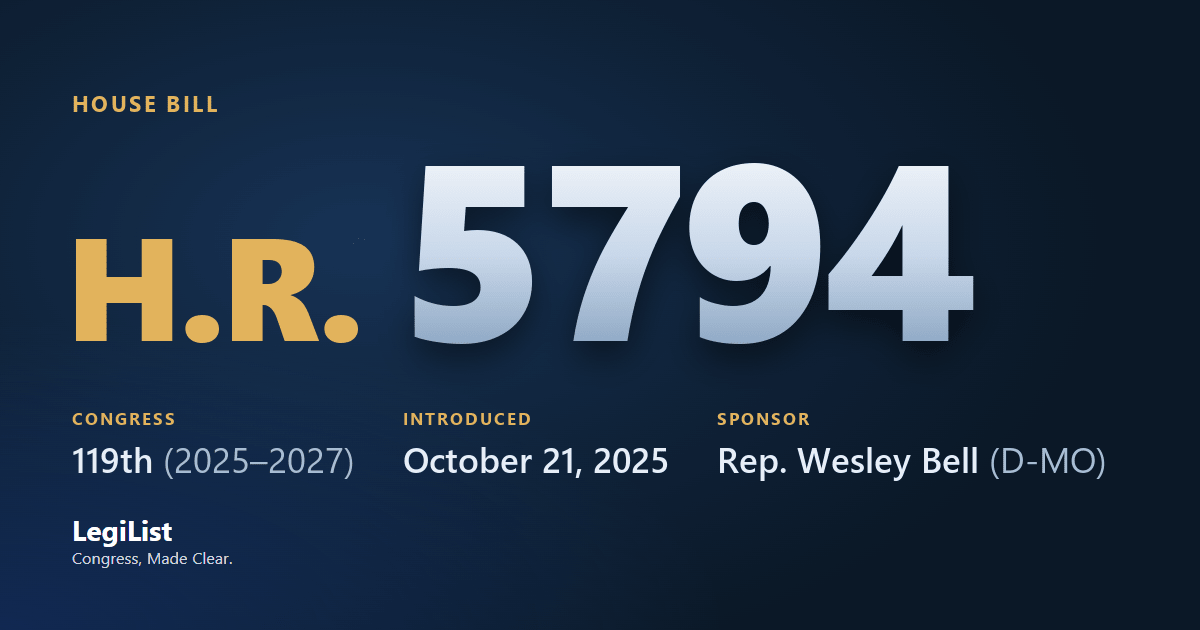
FEMA Operations Continuity Act of 2025
Latest action · Dec 1, 2025 Referred to the Subcommittee on Economic Development, Public Buildings, and Emergency Management.
Progress
Where this bill reached, and when. A stage with no date was not reached; one that failed a vote and later carried shows the date it carried.
- IntroducedOct 21, 2025
- Passed HouseNot reached
- Passed SenateNot reached
- To the PresidentNot reached
- Became lawNot reached
Summary
FEMA Operations Continuity Act of 2025
This bill authorizes the Federal Emergency Management Agency (FEMA) to continue certain disaster relief, recovery, and mitigation operations during a lapse in appropriations (i.e., government shutdown).
Specifically, the bill authorizes FEMA to
- continue all disaster relief, recovery, and mitigation operations funded through the Disaster Relief Fund (DRF);
- obligate and disburse DRF balances for all existing and future disaster declarations, including individual and public assistance under the Robert T. Stafford Disaster Relief and Emergency Assistance Act; and
- maintain personnel and contract support necessary to ensure uninterrupted processing of claims and payments.
The bill also (1) requires all unobligated balances in the DRF to remain available to FEMA for expenditure during a lapse in appropriations; and (2) prohibits the funds from being withheld, sequestered, or reprogrammed during a lapse in appropriations, except as necessary to comply with the Antideficiency Act.
Finally, the bill specifies that, for the purposes of the Antideficiency Act, the FEMA operations authorized by this bill must be considered essential to protect human life and property and are exempt from government shutdown restrictions.
Cosponsors 4
Members who signed on, in the order they did. Signatures ran from Oct 21, 2025 to Jul 14, 2026; 2 are original cosponsors, there from the day it was introduced.
| Seat | Cosponsor | Signed on | |
|---|---|---|---|
| D-LA | Cleo Fields | Original | Oct 21, 2025 |
| D-MA | Seth Moulton | Original | Oct 21, 2025 |
| D-AL | Shomari Figures | Oct 28, 2025 | |
| D-MD | Sarah Elfreth | Jul 14, 2026 |
Committees 1
Where it was sent and what each committee and subcommittee did with it, in order.
| Chamber | Committee | What it did |
|---|---|---|
| House | Transportation and Infrastructure Committee | Referred Oct 21, 2025 |
| Economic Development, Public Buildings, and Emergency Management Subcommittee | Referred Dec 1, 2025 |
Actions 3
Everything that happened, newest first.
- Dec 1, 2025Referred to the Subcommittee on Economic Development, Public Buildings, and Emergency Management.
- Oct 21, 2025Introduced in House
- Oct 21, 2025Referred to the House Committee on Transportation and Infrastructure.
In the Congressional Record 1
Days the Record’s own index lists this bill, newest first, with the pages and the members it names. Pages starting H are the House, S the Senate, E Extensions of Remarks.
| Where | In the Record | Members | Date |
|---|---|---|---|
| House | Lists H4548H.R. 5794–5810 | — | Oct 21, 2025 |
Related bills 1
Companion bills and other measures the record links to this one.
| Bill | Title | Relationship | Latest action |
|---|---|---|---|
| HR 10486 | Relief Without Delay Act | Related bill | Sep 17, 2026 |
Titles 2
Every title it has carried, official and short, at each stage.
- Official Title as Introduced
- To authorize the Administrator of the Federal Emergency Management Agency to continue disaster relief, recovery, and mitigation operations funded through the Disaster Relief Fund in the event of a lapse in appropriations, and for other purposes.
- Short Title(s) as Introduced
- FEMA Operations Continuity Act of 2025
Subjects
Assigned by the Library of Congress. Policy area: Emergency Management.
Text 1
Each version as it was printed, newest first.
- Oct 21, 2025Introduced in House
Everything here is as published by Congress: the summary is the Congressional Research Service's, the action wording is the clerks', and the subjects are the Library of Congress's. How far it got is read from the actions themselves, taking the most recent one of each kind, so a bill that failed a vote and later passed is shown as having passed. Records come from this bill on Congress.gov and govinfo.gov; cost estimates are the Congressional Budget Office's, and the hearings are the printed hearings GovInfo publishes, which can appear months after the hearing.